Fifth review of Digital Contention published in Information, Communication & Society

The fifth review of Digital Contention in a Divided Society has been published this week in Information, Communication & Society.

Zein Al-Maha Oweis provides a very comprehensive overview of the book’s key themes, from the exploration of how ICTs have transformed contentious politics to the use of affective hashtags to discursively frame hybrid media events. Some quotes from the review are below:

“Reilly’s book focuses on answering the question of how social media platforms such as Facebook and Twitter are used by citizens to frame contentious issues in post-conflict Northern Ireland and what this tells us about the potential of information and communication technologies to promote positive intergroup contact in a deeply divided society

”The book answers the question of how social media platforms such as Facebook and Twitter are used by citizens to frame contentious issues in post-conflict Northern Ireland as well as establishing connections between Media and Cultural Policy. This line of research which focuses on social media impact on post-conflict societies is an ever-changing field of research and one that is relevant in this day and age opening new research pathways on the subject in the future”

I am very grateful to Zee for such a thoughtful review of the book, which can be read in full here

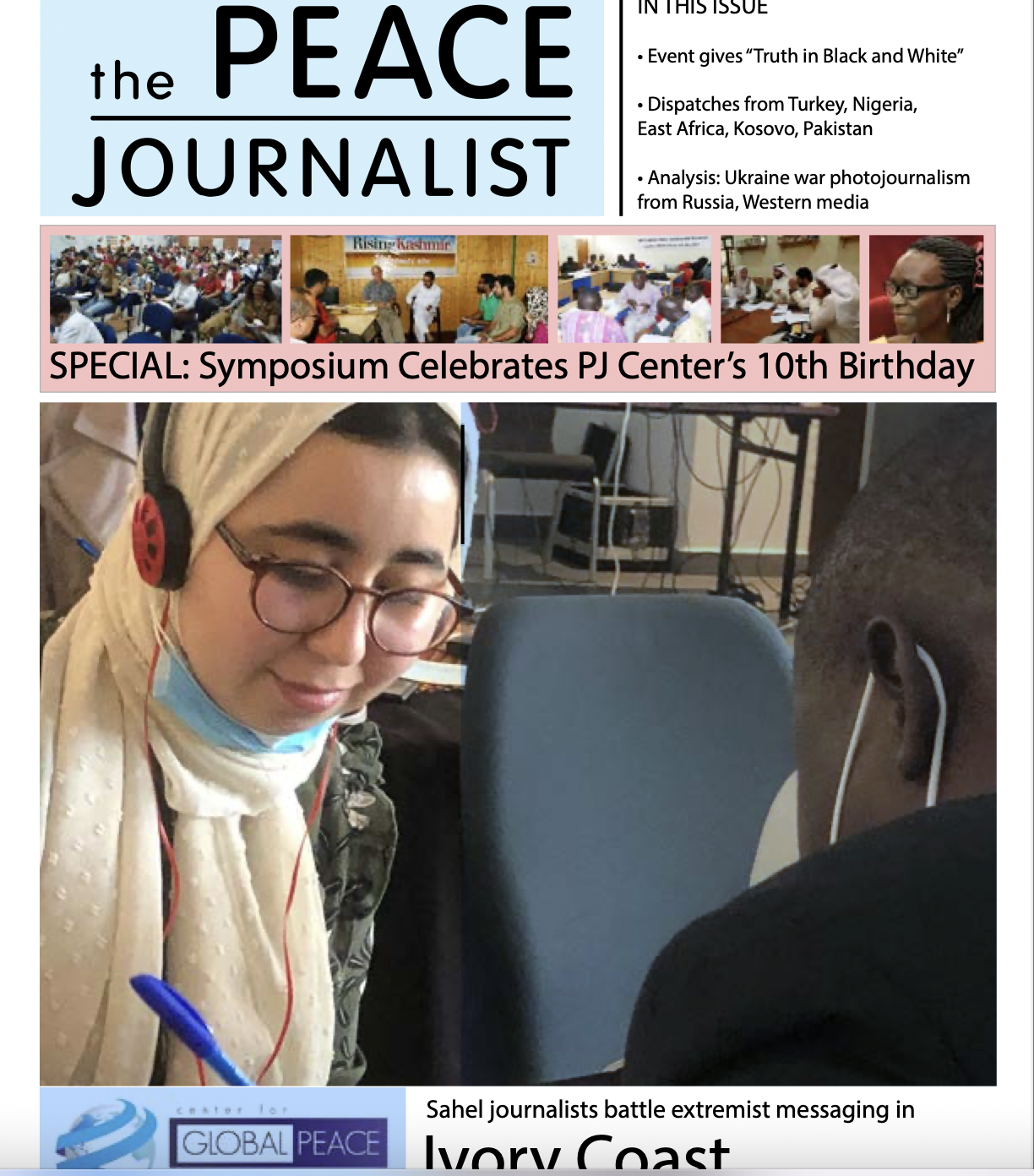
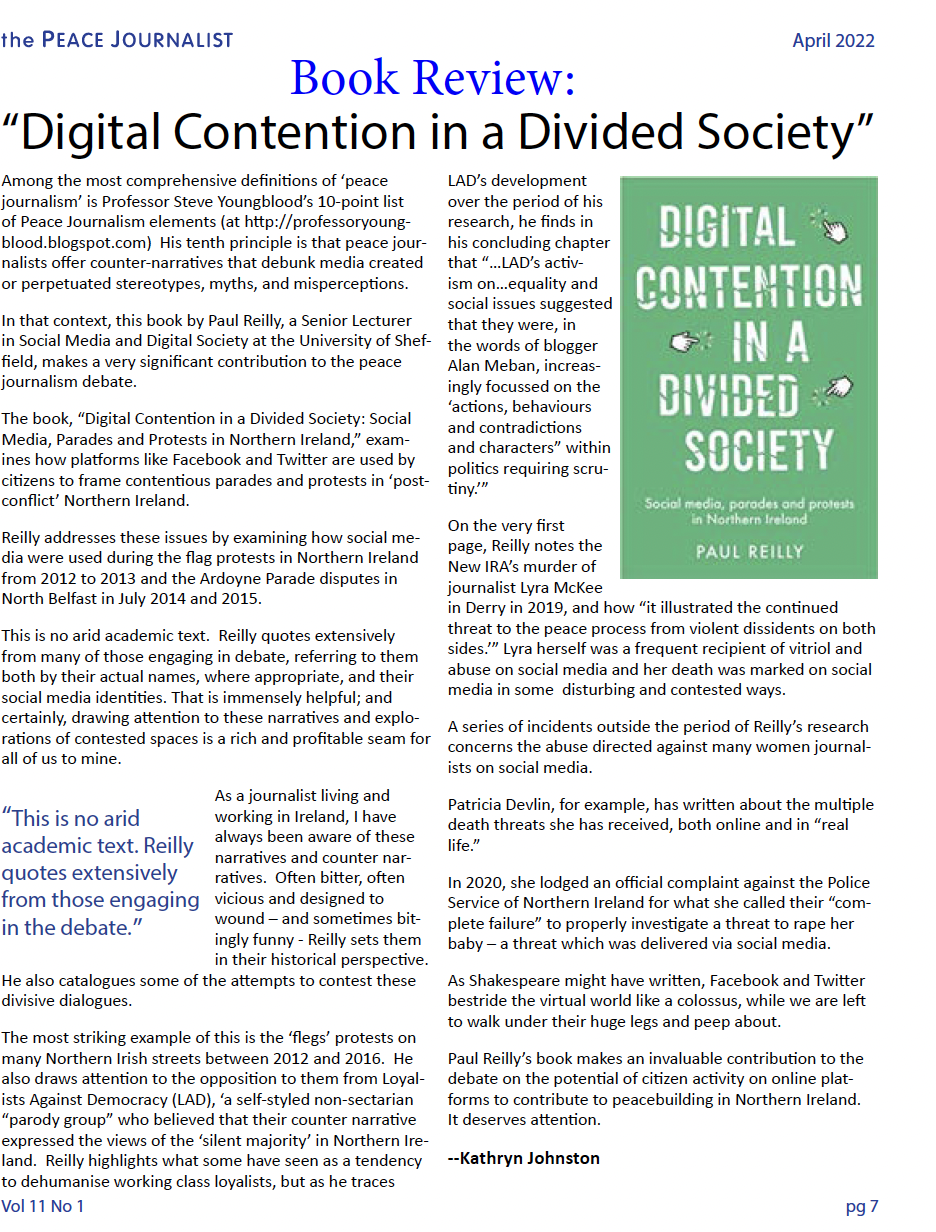
Fourth review of Digital Contention in a Divided Society published in the Peace Journalist Magazine

Peace Journalist Magazine, April 2022

The fourth review of Digital Contention in a Divided Society has been published this week in the Peace Journalist Magazine.

Kathryn Johnston reflects on how online platforms provide spaces for alternative narratives and more disbursing trends such as the threats against women journalists in Northern Ireland. Some quotes from the review are below:

“This is no arid academic text. Reilly quotes extensively from many of those engaging in debate, referring to them both by their actual names, where appropriate, and their  social media identities. That is immensely helpful; and certainly, drawing attention to these narratives and explorations of contested spaces is a rich and profitable seam for  all of us to mine”

“Paul Reilly’s book makes an invaluable contribution to the debate on the potential of citizen activity on online platforms to contribute to peacebuilding in Northern Ireland. It deserves attention”  

I am very grateful to Kathryn for such a thoughtful review of the book, which can be read in full below:

Review of Digital Contention written by Kathryn Johnston

Digital Contention in a Divided Society can be purchased here.

Cited in Parliamentary Assembly of the Council of Europe resolution on the role of media in time of crisis

Photo by Jem Stone/ CC BY

In May 2021, I provided expert testimony to a hearing organised by the Council of Europe Parliamentary Assembly Committee on Culture, Science, Education and Media. The session organised by Rapporteur Annicka Engblom (EPP/CD) focused on the role of the media in times of crises. The agenda can be found here.

In my contribution to the hearing, I drew on my research on social media, parades and protests in Northern Ireland and the #PorteOuverte hashtag during the 2015 November Paris Terror Attacks, as well as the findings from my two EC funded projects CascEff and IMPROVER. My written evidence included a call for greater funding for hyperlocal media and for social media companies to face harsher penalties for failing to remove misinformation and disinformation during crises.

PACE adopted a resolution based on this session this week, which referenced my testimony and several of my publications from CascEff and IMPROVER. It also included my recommendations to protect public service media and compel online platforms to take stronger action on misinformation and disinformation.

Many thanks to Eugen Cibotaru for the invitation to contribute to this resolution. I look forward to giving expert testimony to a PACE hearing on ‘the control of online communication’ next month.

Interview to mark one year since publication of Digital Contention

This week marks one year since the publication of my second book Digital Contention in a Divided Society (Manchester University Press). I sat down (virtually) with John Coster, Director of the Documentary Media Centre, to reflect on this. Our conversation touched on a wide variety of topics including the April 2011 ‘Brexit riots‘, the abuse directed at DUP MLA Diane Dodds on Twitter, and how social media bring us together (and tear us apart).

Big thanks to John for the chat. We hope to do this on a regular basis moving forward.

Interviewed by John Coster to mark one year since Digital Contention published

You can still view the video of the book launch below:

Video of ARUCAD seminar now available online

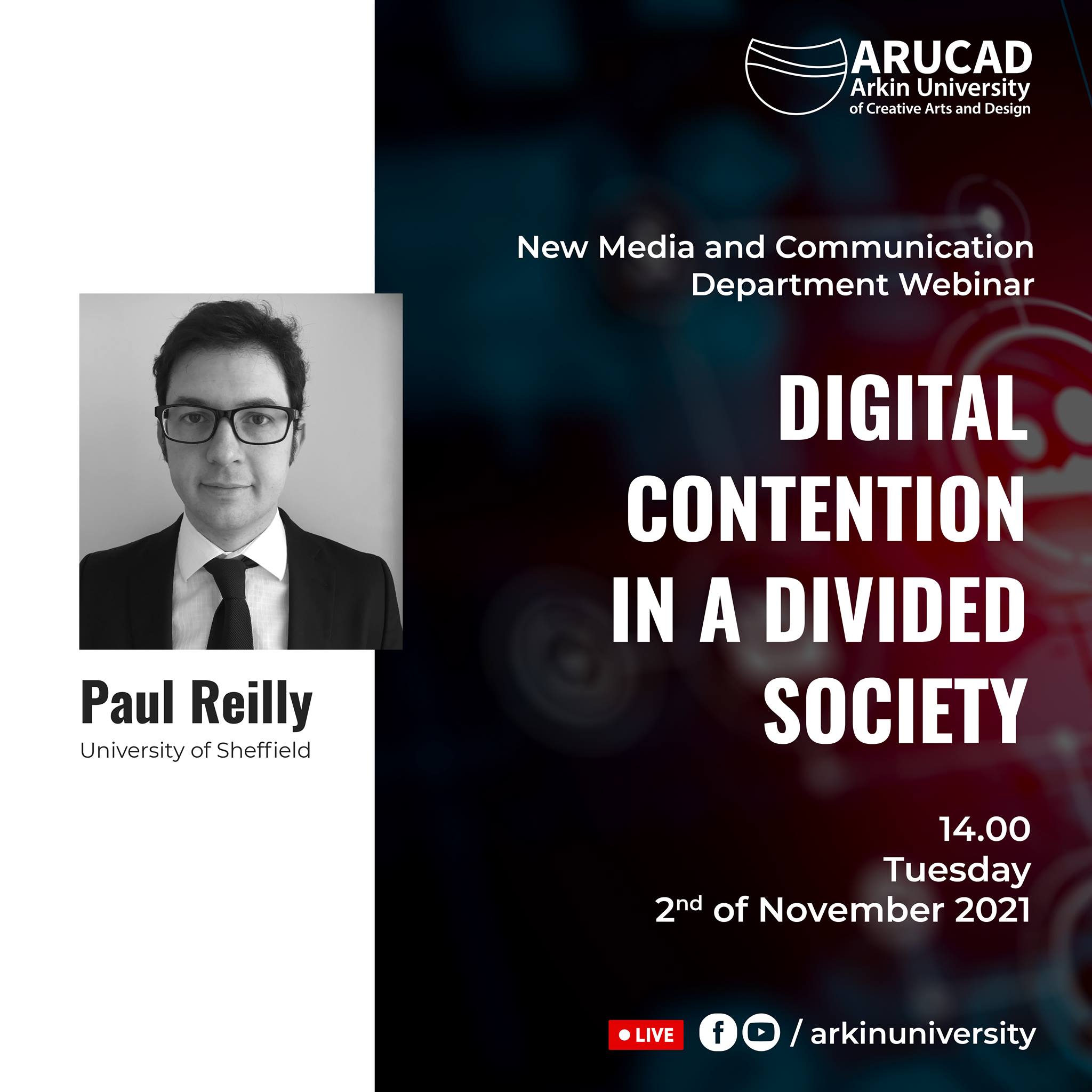
Webinar at ARUCAD, 2 November 2021.

Last week I spoke to Dr. Hakan Karahasan, Head of the Department of Advertising Design and Communication as part of the seminar series at the Arkin University of Creative Arts and Design (ARUCAD). Many thanks to Hakan and his colleagues for hosting this talk.

The video can be watched below:

Invited book talk at Arkin University of Creative Arts and Design

Book talk, Arkin University, 2 November 2021

This afternoon I will be delivering a Webinar at Arkın University of Creative Arts and Design. Hosted by Dr. Hakan Karashan, I will be discussing some of the key findings from my recently published book Digital Contention in a Divided Society.

The Webinar will be streamed live on the ARUCAD Facebook and YouTube channels from 12pm UK time (2pm Cyprus time).

Many thanks to Hakan for the invitation and I look forward to our conversation on digital citizenship, activism and politics later.

Digital Contention review in Journal of Communication

Digital Contention in a Divided Society, out now with Manchester University Press

The second review of Digital Contention in a Divided Society has been published in Journal of Communication (Impact Factor 7.270, rated 6 out of 94 in Communication).

Some excerpts are below:

“Overall this study represents a significant contribution to the discussion about the evolving relationship between social media, contentious politics, and social media movements in post-conflict societies. It is a solid contribution to test the polysemic nature of Twitter hashtags and their capacity to mobilize affective publics in contested and polarized social media environments”

“Reilly’s book is invaluable when it mentions the unprecedented opportunities for citizens to engage in areas such as sousveillance in the face of reporting perceived police violence. Reilly’s work joins the ranks of upcoming scholarly work relevant in the field such as Denisova (2019), Ozduzen (2020), and El Issawi (2021). It is a brilliant example of adding to the author’s previous work (2010) building upon field research and data mining techniques and able to define its own strengths and limitations of the approach”.

“It is a perfect academic study for identifying public engagement in the times of the dysfunctional politics searching for reconciliation through new conceptual tools like silly citizenship in post-Brexit Irish border that will remain disputed in the years to come”.

I am very grateful to Murat Akser (Ulster University) for this very generous review. It can be read below;

Digital Contention in a Divided Society is out now and can be purchased in eBook and hardback formats here

Video of PSA MPG ‘in conversation’ now available

Digital Contention in a Divided Society, MUP 2021.

Last week I spoke to Dr Emily Harmer (University of Liverpool) about my new book, Digital contention in a divided society – Social media, parades and protests in Northern Ireland, as part of the Political Studies Association Media and Politics Group Seminar Series.

The video can be watched below:

Video of PSA MPG event

Many thanks to Emily and James Dennis (University of Portsmouth) for organising the event- I really enjoyed it!

The Conversation article on social media and NI protests published

Paul Faith/PA Images/Alamy Stock Photo

The Conversation UK have published an essay of mine on how to follow Northern Irish protests on social media. Drawing on my research on the union flag protests, Ardoyne parade dispute and my recently published book, I argue that we should all be careful about what we share on sites like Facebook and Twitter during the marching season. Key tips such as ‘Check before you share’, ‘know who to follow’ and ‘play the ball, not the person’ are shared in the piece. I also recommend following journalists and factchecking organisations such as FactCheckNI in order to counter the spread of misinformation and disinformation.

Many thanks to Victoria Wood for helping with the pitch and Avery Anapol for providing feedback on the final version. The post can be viewed here

Expert testimony at Council of Europe Parliamentary Committee hearing on role of media in crises

Photo by Jem Stone/ CC BY

Last Friday I provided expert testimony to a hearing organised by the Council of Europe Parliamentary Assembly Committee on Culture, Science, Education and Media. The session organised by Rapporteur Annicka Engblom (EPP/CD) focused on the role of the media in times of crises. The agenda can be found here.

In my contribution to the hearing, I drew on my research on social media, parades and protests in Northern Ireland and the #PorteOuverte hashtag during the 2015 November Paris Terror Attacks, as well as the findings from my two EC funded projects CascEff and IMPROVER. My recommendations included a call for greater funding for hyperlocal media and for social media companies to face harsher penalties for failing to remove misinformation and disinformation during crises.

Many thanks to Eugen Cibotaru for the invitation and his help with the logistics.