Earlier this week, I spoke to Thom Waite. It was for a Dazed article on the role of Elon Musk’s X. The focus was during the recent US Presidential Election. We discussed whether the recent exodus from X will continue. We also explored reasons why people would choose to stay on the microblogging site.
Many thanks to Thom for the invitation. The article can be read in full here.
BBC Breakfast interview on social media content moderation
This week I was interviewed by BBC Tech editor Zoe Kleinman. It was for a piece on the human cost of social media content moderation. We discussed whether it was possible for AI to replicate the job done by human moderators. I argued that human moderation was necessary, but that these jobs are very harmful to those who do them.
The clip can be viewed below.
I also contributed to this article exploring the human costs of moderating traumatic images and videos.
Many thanks to Zoe, Georgina and the BBC crew for the chat, and to Charlotte Morris for helping organise this.
I have written an essay for the Glasgow Social Sciences Hub. My essay discusses why social media is an unreliable barometer of public opinion. I argue that bot activity and manipulation gave US voters a skewed reality. This happened in the run-up to the 2024 US Presidential Election. I also point to the problem of information pollution and how citizens actively avoid news on these platforms.
Thanks to Charlotte Morris for the support in getting this out. The piece can be read in full here.
Donald Trump criticised for spreading misinformation about Hurricane Hélène
Last week I spoke to Sebastian Seibt from France 24. We talked about how neo-Nazi groups were using Hurricane Hélène. They aimed to show themselves as civil society actors, amplifying misinformation and conspiracy theories about the relief efforts favouring migrants.
I argued that the misinformation spread by US Presidential candidate Donald Trump was very damaging. His false claims about the Biden administration not supporting victims influenced the behavior of vulnerable citizens. They were more likely to turn to extremist groups like Patriotic Front for information and support than the authorities. In effect, they exploited this crisis to rebrand themselves as legitimate, credible actors.
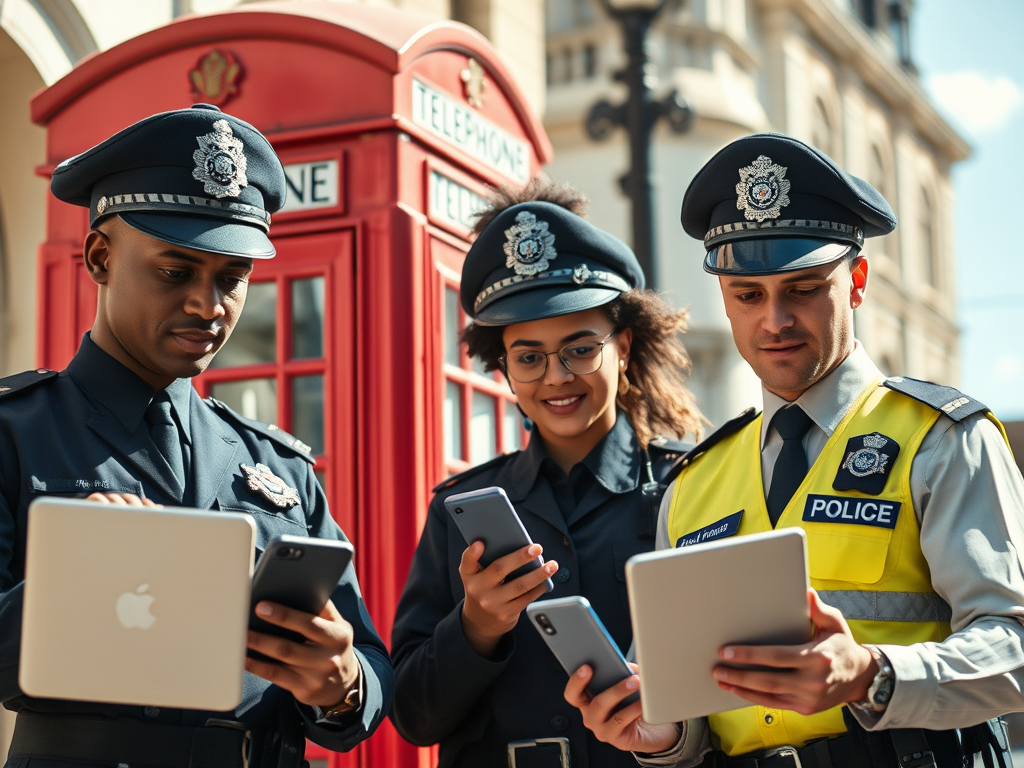
Last week, Andy Bruce interviewed me. This was for a Reuters piece on the number of British police forces deciding to remove their Twitter/X accounts. I argued that the rise of hate speech, extremist content, and misinformation was a major factor. This led public organisations to leave the microblogging site for other platforms.
Thanks to Andy and Charlotte Morris for the invite. The article can be read in full here.
My first paper is entitled ‘Watching over the watchers? Ethical dilemmas in qualitative studies of sousveillance on YouTube. Drawing on my previous work on ‘The Battle of Stokes Croft‘ and the union flag protests, I critique the notion that unaware participants are ‘fair game’ in online research. The abstract can be read in full here.
My second paper, co-authored with Suay Özkula, draws on our systematic review of empirical Digital Activism research between 2011 and 2018. We focus on how activists and social movements within the so-called Global South are represented within the field. The abstract can be read in full here.
If you are at the conference this week please do say hi – looks like a great programme!
I am delighted to share a preprint copy of my entry in the forthcoming Elgar Encyclopedia of Political Communication, to be published in 2025.
In ‘Belief Echoes’, I explore how and why people continue to believe false information even when it has been debunked or factchecked. I draw on examples from my own research on Northern Ireland and the COVID-19 pandemic to show how there is often a small proportion of the population who continue to remain within epistemic bunkers revolving around misinformation and half-truths.
Many thanks to the editors (Alessandro Nai, Max Grömping, and Dominique Wirz) for all their work bringing together the 430+ entries (from 570+ authors) in the Encyclopedia. I look forward to reading the final version when it’s out early next year.
The preprint version of my entry can be read here.
“The book enables a wide range of readers – academic scholars and researchers, but also citizens and activists – to grasp the relevance of contentious politics and how these are articulated and disputed in the digital era, especially in our increasingly datafied social world”
“This book is a must-read for anyone interested in the context of NI as a divided society, understanding the recent history of local protests and disputes (between 2012-2015) and the wider scene of the relations between NI, Ireland, and the UK”
“Overall, this book offers valuable and detailed insights into the ways that digital media shape and fuel contentious politics, social mobilisation and citizenship. It shows how online platforms can impact polarised societies negatively, by reproducing prejudice and hate speech, but also positively by managing inter-group tensions, avoiding violence and social unrest, and providing informal learning”
“This work can help academics, activists, political and media experts, as well as the general public evaluate the occurrence of disputable events, such as protests and demonstration parades, within profoundly fragmented contexts like NI particularly in the face of rising mis- and dis-information in the digital age”
I am very grateful to Penny for such a thoughtful review of the book, which can be read in full here
I have had an op-ed published on LBC Views yesterday. I discussed how social media platforms will face penalties for not doing more to combat online misinformation and hate speech that contributed to the UK riots. I also argued that politicians and public figures who have created a toxic discourse around immigration need to take some of the blame for the civil unrest too.
Thanks to Katy Rankin for the invitation. The post can be read here







 Dr Paul Reilly
