TEN presentation on MCS Independent Research Project

Yesterday, I delivered a presentation at a symposium. The symposium, Leading Curriculum and Assessment Innovation, was organised by the University of Glasgow’s Teaching Excellence Network.

My presentation was titled ‘ Is a dissertation the best way to assess international students? Developing the MCS Independent Research Project’. I discussed the challenges I faced developing and implementing the IRP over the past few years. These challenges ranged from training staff and students to the workload implications of adopting this new model.

Thanks to Julia, Honor and Errol for organising the symposium, and the other participants for their inspiring contributions.

New publication: entry in Elgar Encyclopedia  of Political Communication

Elgar Encyclopedia of Political Communication

I have an entry in the Elgar Encyclopedia of Political Communication, which was published this week.

In ‘Belief Echoes’, I explore how and why people continue to believe false information. This occurs even when the information has been debunked or fact-checked. I draw on examples from my own research on Northern Ireland and the COVID-19 pandemic. These examples show that a small proportion of the population often remain within epistemic bunkers. These bunkers revolve around misinformation and half-truths.

Many thanks to the editors (Alessandro Nai, Max Grömping, and Dominique Wirz). They worked hard to bring together the 430+ entries from 570+ authors in the Encyclopedia.

The preprint version of my entry can be read here.

Op-ed published in Scotsman on Sunday

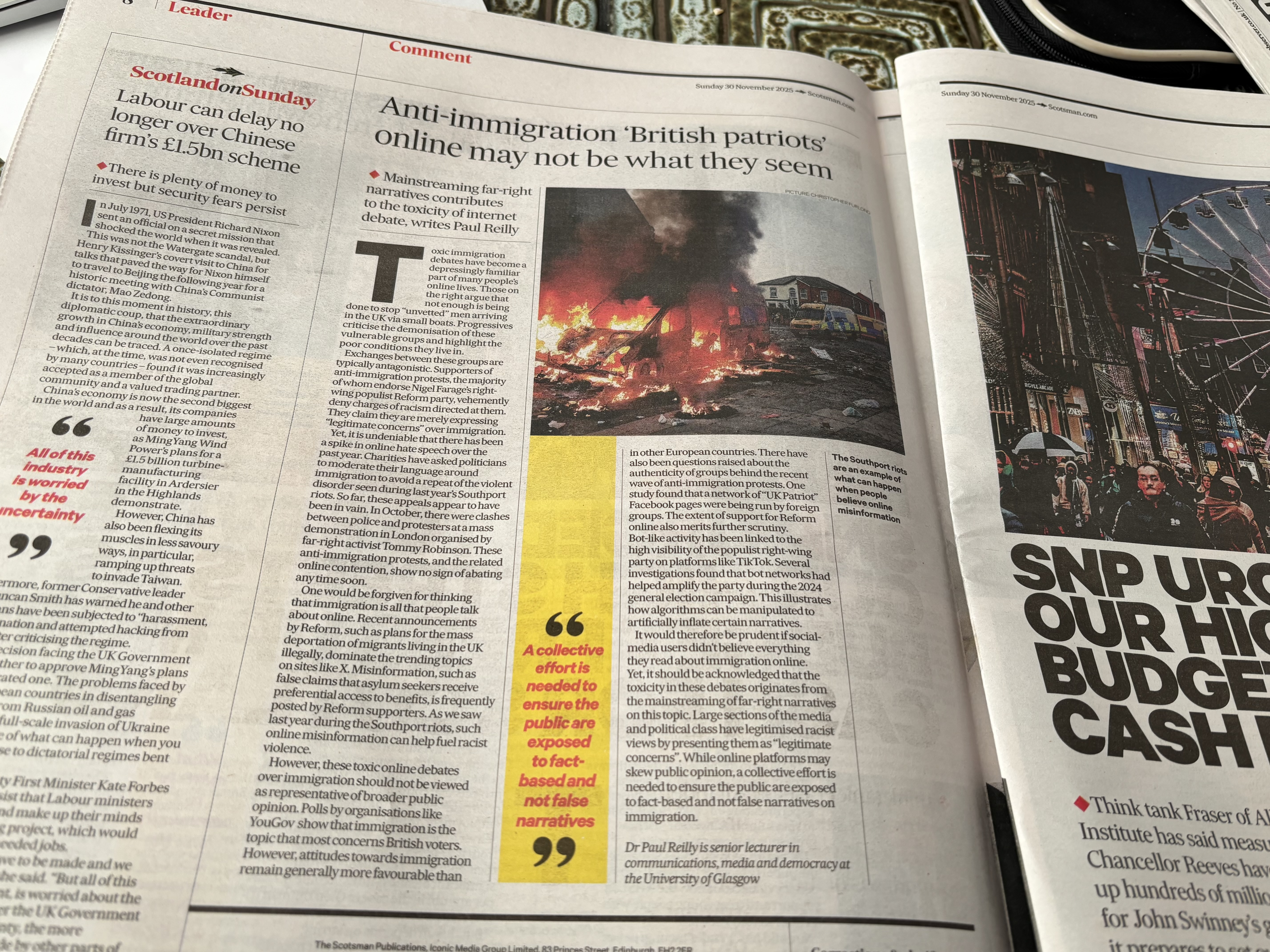
Op-ed in Scotland on Sunday

Yesterday I had an op-ed published in Scotland on Sunday. I discussed the toxic immigration debates on social media and the rise of Nigel Farage’s Reform party online. My argument was that we should be more sceptical of what we see online. There is already evidence that bots are used to amplify Reform’s talking points on this issue. The public is apparently obsessed with ‘small boats’ and ‘illegal immigration’. This is due to years of mainstreaming far-right narratives on this topic. I conclude with the argument that a collective effort is required. This effort must ensure that social media users are exposed to facts. It is essential they are not misled by false narratives on immigration.

The full text of the op-ed can be read here.

As always, many thanks to Charlotte Morris for helping arrange this. I also appreciate the editorial team at SoS for publishing it.